Please fill out the form below and we will get back to you as soon as possible.
Blogs
24
Sep
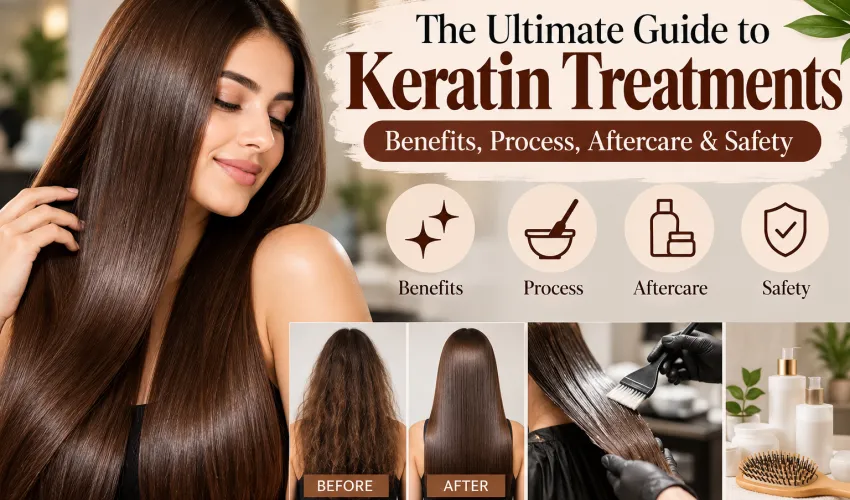
The Ultimate Guide to Keratin Treatments: Benefits, Process, Aftercare & Safety
The Ultimate Guide to Keratin Treatments
Frizzy, rough and difficult-to-manage hair can make everyday styling feel like a chore. You may spend a lot of time blow-drying, straightening or applying styling products, only to find your hair becoming frizzy again when the weather gets humid.
This is one reason keratin treatments have become a popular salon service.
A professional keratin treatment can help make hair look smoother, shinier and easier to manage. But there is much more to the treatment than simply applying a product and using a flat iron.
If you are considering a keratin treatment for the first time, this guide will help you understand what a keratin treatment is, how it works, its benefits, the salon process, aftercare, safety considerations and what you should ask your stylist before booking an appointment.
What Is a Keratin Treatment?
A keratin treatment is a professional hair-smoothing service designed primarily to reduce frizz and improve the smoothness and manageability of the hair.
Keratin is a structural protein naturally present in hair. Hair can become dry, rough and difficult to manage due to heat styling, colouring, chemical processing, environmental exposure and everyday wear.
During a salon treatment, a keratin-based or other smoothing formulation is applied to the hair and then processed according to the product's instructions. Heat is commonly used as part of the process to help create the desired smooth finish.
The exact results depend on the product, technique, hair type and condition.
Important: Not every product sold as a "keratin treatment" has the same formulation or produces the same result.
How Does a Keratin Treatment Work?
Although salon techniques differ, a professional keratin treatment generally follows a process like this:
1. Hair Consultation
The stylist examines your hair and discusses your expectations.
This is an important step because fine, thick, curly, coloured, bleached and chemically treated hair may require different approaches.
2. Hair Cleansing
The hair is thoroughly cleansed to remove excess oil, styling products and buildup.
3. Keratin or Smoothing Product Application
The product is applied carefully, usually in sections, so that the hair receives an even application.
4. Processing
The product is left on the hair for the period specified by the manufacturer.
5. Blow-Drying and Heat Application
The hair is dried and, depending on the treatment, heat is used to create or seal the desired smoothing effect.
6. Final Styling
The stylist finishes the hair and explains the recommended aftercare routine.
The complete appointment can take several hours, particularly for long or thick hair.
Benefits of Keratin Treatments
Why do so many people choose keratin treatments?
Here are some of the most common reasons.
1. Helps Reduce Frizz
Humidity can be particularly frustrating for people with naturally frizzy hair. A smoothing treatment may help control the appearance of frizz and make hair look more polished.
2. Makes Hair Easier to Manage
If you spend a lot of time detangling, blow-drying or straightening your hair, a smoothing treatment may make your daily routine easier.
3. Creates a Smoother Appearance
Hair can appear softer and more polished after a professional smoothing service.
4. Adds Shine
Smoother hair surfaces can reflect light more evenly, which may give the hair a shinier appearance.
5. Can Reduce Styling Time
Many clients choose keratin treatments because they want to spend less time managing their hair every morning.
6. Helps With Humidity Management
For people living in humid climates, frizz control can be one of the biggest attractions of a professional smoothing treatment.
Does a Keratin Treatment Straighten Hair?
This is one of the most searched questions about keratin treatments.
The answer depends on the specific product and treatment technique.
Some keratin treatments are primarily designed to reduce frizz and improve manageability while preserving some natural waves or curls. Other smoothing systems can create a noticeably straighter appearance.
Therefore, don't assume that every keratin treatment will give you pin-straight hair.
Before the treatment, tell your stylist exactly what you want:
- Reduced frizz
- Smoother waves
- More manageable curls
- A straighter appearance
- Easier blow-drying
- More shine and softness
Clear communication can help you and your stylist choose a treatment that matches your expectations.
Which Hair Types Can Have a Keratin Treatment?
Keratin and smoothing treatments may be considered for different hair textures, including:
- Straight hair
- Wavy hair
- Curly hair
- Thick hair
- Frizzy hair
- Coarse hair
- Difficult-to-manage hair
However, hair condition is just as important as hair type.
If your hair is severely damaged, brittle or heavily bleached, a professional should evaluate it before treatment.
Previously coloured or chemically treated hair may also need special consideration.
Keratin Treatment for Frizzy Hair
If frizz is your main concern, a keratin treatment may be an option worth discussing with a professional stylist.
Frizz can be influenced by humidity, hair porosity, dryness, chemical processing and natural hair texture. A smoothing treatment can make the surface of the hair appear more controlled and polished.
However, a keratin treatment isn't a permanent solution to every cause of frizz.
Your everyday hair-care routine still matters.
How Long Does a Keratin Treatment Last?
There isn't one fixed duration for every keratin treatment.
Results can vary based on:
- Hair texture
- Hair condition
- Frequency of washing
- Products used at home
- Exposure to humidity
- Swimming
- Chemical treatments
- The particular smoothing system
- How the treatment was performed
Depending on the product, results may last for several weeks or longer.
Always follow the specific product instructions and your stylist's recommendations rather than relying on a generic time period.
Keratin Treatment Aftercare
Good aftercare can help you maintain the appearance of your treated hair.
Choose Appropriate Hair Products
Ask your stylist which shampoo, conditioner and styling products are compatible with your particular treatment.
Avoid Excessive Washing
Frequent washing can cause some smoothing treatments to fade more quickly.
Use Heat Protection
Even after a keratin treatment, excessive heat can contribute to dryness and hair damage. Use a suitable heat-protection product when using hot styling tools.
Take Care Around Swimming
Chlorinated and salt water can affect treated hair. If you swim regularly, ask your stylist how to protect your hair.
Condition Regularly
A suitable conditioner or hair mask can help maintain softness and manageability.
Keratin Treatment vs. Hair Straightening
Keratin smoothing and chemical hair straightening are not necessarily the same thing.
Keratin/Smoothing Treatment
Generally focuses on:
- Frizz reduction
- Smoothness
- Shine
- Manageability
- Easier styling
Chemical Straightening
Generally focuses on changing the hair's structure to create a straighter appearance.
The right option depends on your desired result, hair condition and the products used.
If you're unsure, discuss your goal with a professional rather than choosing a treatment based solely on its name.
Is a Keratin Treatment Safe?
Safety depends on the formulation, ingredients, application technique, ventilation and professional practices.
One important consideration is formaldehyde and formaldehyde-releasing ingredients. The U.S. FDA notes that some hair-smoothing products can release formaldehyde gas when heated, potentially irritating the eyes, nose, throat and lungs.
OSHA has also reported that some hair-smoothing products can expose salon workers to formaldehyde during use, including products that may have been marketed or labelled in ways that did not clearly indicate the exposure risk.
This does not mean every keratin or smoothing treatment contains formaldehyde. Products differ, so it is important to know exactly what product your salon intends to use.
Before Your Treatment, Ask:
- What is the name of the product?
- Can I see the ingredient list?
- Does it contain formaldehyde, formalin or methylene glycol?
- Is a Safety Data Sheet available?
- Is the salon properly ventilated?
- Are the stylist and salon trained to use the product safely?
- Are there alternative products available?
The FDA specifically recommends that consumers avoid applying professional hair-smoothing products themselves at home and instead use trained professionals.
How Much Does a Keratin Treatment Cost in India?
The cost of a keratin treatment varies from salon to salon.
Factors that can affect the price include:
- Salon location
- Hair length
- Hair thickness
- Product brand and formulation
- Stylist experience
- Treatment technique
- Hair condition
- Additional services
In major Indian cities such as Mumbai, Delhi, Bengaluru and Hyderabad, prices can vary significantly between salons.
Instead of selecting a treatment based only on the lowest price, consider the professional experience, product transparency, hygiene, ventilation, consultation and aftercare guidance.
How Often Should You Get a Keratin Treatment?
There is no universal schedule for everyone.
Repeated chemical processing and heat exposure can contribute to dryness or damage, particularly when hair is already fragile.
Your stylist should examine your hair before recommending another treatment.
If your hair feels excessively dry, brittle or weak, it may be better to address its condition before undertaking another chemical smoothing service.
Common Keratin Treatment Myths
Myth 1: Keratin Treatments Are Only for Curly Hair
False. People with straight, wavy, curly and frizzy hair may consider smoothing treatments depending on their goals.
Myth 2: Every Keratin Treatment Makes Hair Completely Straight
False. Different formulations produce different results.
Myth 3: Keratin Treatment Permanently Changes All Your Hair
Not necessarily. Many smoothing treatments gradually wear off with washing and normal hair growth.
Myth 4: Keratin Treatment Completely Repairs Damaged Hair
False. A treatment can improve the appearance and manageability of hair, but severely damaged hair may require a different care strategy.
Myth 5: All Keratin Treatments Are the Same
False. Formulations, ingredients, processing methods and expected results can vary significantly.
Who Should Consider a Keratin Treatment?
A keratin or smoothing treatment may be worth discussing with a professional if you:
- Struggle with persistent frizz
- Want easier daily styling
- Spend considerable time blow-drying your hair
- Want a smoother appearance
- Want to improve manageability
- Have thick or difficult-to-style hair
- Want to reduce the effect of humidity on your hairstyle
However, the treatment should be selected based on your hair condition and desired result.
Who Should Be More Cautious?
A professional consultation is particularly important if you have:
- Severely damaged hair
- Very brittle hair
- Recently bleached hair
- Multiple recent chemical treatments
- A sensitive scalp
- A history of reactions to hair products
If you have concerns about an ingredient or have experienced a previous reaction, discuss this with an appropriate healthcare professional and your stylist before treatment.
10 Questions to Ask Before Getting a Keratin Treatment
Before booking your appointment, ask your salon:
- Which product will you use?
- Can I see the ingredient list?
- Is the product suitable for my hair type?
- Is my hair healthy enough for this treatment?
- Will the treatment reduce frizz or make my hair straight?
- How long should the results last?
- What aftercare products do you recommend?
- When can I wash my hair after treatment?
- What precautions are taken during the treatment?
- How often can I safely repeat the treatment?
These questions can help you make a more informed decision.
Frequently Asked Questions About Keratin Treatments
Is keratin treatment good for frizzy hair?
A professional smoothing treatment can help reduce the appearance of frizz and make hair easier to manage. Results vary according to hair type, product and technique.
How long does a keratin treatment take?
A salon appointment can take several hours, depending on hair length, thickness, texture and the treatment selected.
Can I get a keratin treatment on coloured hair?
It may be possible, but the timing and suitability depend on your hair's condition and the products involved. Always tell your stylist about recent colouring or chemical treatments.
Can men get keratin treatments?
Yes. Keratin and smoothing treatments are not limited by gender. The important factors are hair type, condition and the desired result.
Does keratin treatment damage hair?
The answer depends on the formulation, application technique, heat exposure and condition of the hair. Some smoothing products can involve chemical and heat exposure, so professional assessment and proper product use are important.
Can I wash my hair after a keratin treatment?
The timing varies by treatment. Follow the specific instructions provided by your stylist and product manufacturer.
Can keratin treatment remove natural curls?
Some treatments can significantly reduce curl or wave, while others are designed mainly for frizz reduction. Discuss your desired result before treatment.
Final Thoughts
A keratin treatment can be an attractive option if you want smoother, shinier and more manageable hair without spending as much time on daily styling.
But the best results don't come from simply choosing the most popular treatment. They come from understanding your hair, choosing an appropriate professional service, knowing what product is being applied and following the correct aftercare routine.
Most importantly, don't be afraid to ask questions before your appointment. Understanding the ingredients, expected results and safety precautions can help you approach your salon treatment with realistic expectations.
Smooth hair is great—but healthy, well-cared-for hair should always come first.
Recent Post