-
-
-
Mumbai
Please fill out the form below and we will get back to you as soon as possible.
Hair Transplant Hairline Design: How Natural-Looking Hair Restoration Is Planned in Delhi NCR
About
A hair transplant is not simply about filling an empty area of the scalp with more hair. One of the most important aspects of hair restoration is hairline design.
The hairline is one of the first features people notice when looking at the face. If it is designed too low, too straight, too dense, or without considering the patient's natural facial proportions, the result may look artificial.
For people considering a hair transplant surgeon in Delhi NCR, understanding how the hairline and graft placement are planned can provide a better understanding of the treatment process.
At Dermalife Hair & Skin Clinic, hair restoration planning is based on individual hair-loss patterns, donor availability, facial characteristics, and long-term restoration goals.
What Is a Hair Transplant Hairline?
The hairline is the transition between the forehead and the hair-bearing scalp.
A natural hairline is rarely a perfectly straight horizontal line. It typically contains subtle irregularities and varying density.
During hair transplantation, the surgeon needs to consider:
- Facial proportions
- Age
- Existing hairline
- Hair-loss pattern
- Hair characteristics
- Donor-area availability
- Future hair-loss progression
- Desired level of restoration
This makes hairline design an important part of the overall transplant plan.
Why Hairline Design Matters
Imagine two people receiving the same number of grafts.
One receives grafts without carefully considering hairline shape, direction, or facial proportions. The other receives a customized design based on their individual features.
The number of grafts may be similar, but the visual appearance can be very different.
A well-planned hairline aims to blend with existing hair and facial features rather than appearing like a separate transplanted section.
The Hairline Should Match the Face
There is no single hairline design that works for everyone.
A younger patient may naturally have a different hairline from an older patient. Similarly, facial shape, forehead proportions, hair density, and hair texture can influence how a suitable hairline is planned.
A consultation may consider:
Forehead Proportion
The relationship between the forehead and the rest of the face can influence the proposed hairline position.
Facial Shape
The hairline should complement the patient's overall facial structure.
Existing Hair
Remaining native hair should be considered when planning the transition between transplanted and existing areas.
Age
Hair restoration should be planned with long-term considerations in mind rather than focusing only on the patient's current appearance.
What Makes a Hairline Look Natural?
Several factors contribute to the appearance of a natural-looking transplanted hairline.
1. Irregularity
A completely straight line may look artificial. Natural hairlines generally have subtle variations.
2. Single-Hair Grafts
Fine follicular units can be useful in creating a softer transition at the front of the hairline.
3. Correct Direction
Hair grows in different directions across different parts of the scalp. Transplanted follicles need to be positioned appropriately to blend with surrounding hair.
4. Gradual Density
The frontal transition should generally not appear like a sudden wall of dense hair.
5. Proper Hairline Position
Placing the hairline too aggressively can use a large amount of limited donor hair.
These details make hair transplantation both a surgical and aesthetic process.
Why Graft Planning Is Just as Important
A patient's donor hair is limited.
This means the surgeon must decide how many grafts should be used and where they will provide the greatest visual benefit.
For example, a patient may have:
- Receding temples
- Frontal thinning
- Mid-scalp thinning
- Crown hair loss
Trying to maximize density in every area at once may not always be the most appropriate strategy.
Instead, grafts may need to be distributed according to the patient's priorities and available donor supply.
Understanding Donor Area Management
The donor area usually provides the follicles used for transplantation.
Because donor follicles are a limited resource, their management is an important part of long-term hair restoration.
Poor planning can potentially lead to excessive harvesting or reduced donor density.
During consultation, patients should ask:
- How many grafts are available?
- How many grafts are recommended?
- How will the donor area be managed?
- Could additional hair loss occur in the future?
- Will there be enough donor supply for future needs?
These questions can help patients understand why graft planning matters.
FUE and Hairline Restoration
Follicular Unit Extraction (FUE) involves extracting individual follicular units from the donor area and transplanting them into areas requiring restoration.
FUE is commonly used for:
- Receding hairlines
- Frontal hairline restoration
- Crown restoration
- Mid-scalp thinning
- Generalized pattern hair loss
The technique selected should depend on the individual case rather than simply choosing a procedure because it is popular.
At Dermalife Hair & Skin Clinic, Boosted FUE is also offered as part of its hair restoration services.
Hair Transplant for a Receding Hairline
A receding hairline is one of the most common reasons people explore hair transplantation.
However, restoring a receding hairline involves more than filling the temples.
The treatment plan may need to consider:
- Current recession
- Existing frontal hair
- Temple shape
- Hair density
- Donor availability
- Future recession
For younger patients especially, conservative and long-term planning can be important because hair loss may continue after transplantation.
Crown Hair Transplant Requires Different Planning
The crown is different from the frontal hairline.
Hair in the crown often grows in a whorl pattern, meaning the direction and distribution of transplanted follicles need to account for this natural pattern.
Because crown restoration can require significant graft numbers, the surgeon may need to evaluate whether restoring the crown immediately is appropriate or whether donor follicles should be prioritized for another area.
Hair Characteristics Can Affect the Appearance
Not all hair produces the same visual coverage.
Characteristics such as:
- Hair thickness
- Hair texture
- Curl or wave
- Hair color
- Contrast between hair and scalp
can influence how dense the transplanted area appears.
For example, thicker or naturally curly hair may provide different visual coverage compared with fine, straight hair.
This is one reason graft numbers should not be considered independently from hair characteristics.
Can Women Have Hairline Restoration?
Yes, selected women may also undergo hair transplantation.
However, female hair loss can have different patterns and causes.
A woman experiencing thinning may need evaluation for potential causes before considering surgery.
A female hair transplant in Delhi may be considered when the pattern of hair loss and donor-area characteristics make transplantation appropriate.
The treatment should be based on diagnosis rather than simply treating visible thinning.
How Much Does Hair Transplant Cost in Delhi?
The hair transplant in Delhi price varies between patients.
Factors that may influence the overall cost include:
- Number of grafts
- Technique used
- Degree of hair loss
- Donor-area condition
- Complexity of the procedure
- Surgical team
- Clinic facilities
- Follow-up requirements
This is why searching for a fixed hair transplant price list in Delhi may not provide an accurate estimate for an individual patient.
A consultation allows the doctor to assess the case and determine the approximate graft requirement and treatment plan.
Is the Cheapest Hair Transplant in Delhi the Right Choice?
Cost is naturally an important consideration.
However, comparing clinics solely on the basis of the lowest price can leave important questions unanswered.
Patients should also understand:
- Who performs the procedure?
- How many grafts are planned?
- How is the donor area managed?
- What technique is being recommended?
- What does the package include?
- What follow-up is provided?
The cheapest package and the most appropriate treatment plan are not necessarily the same thing.
What About Hair Transplant in Noida or Gurgaon?
Delhi NCR patients also have access to clinics in Noida and Gurgaon.
If you are searching for a hair transplant in Noida or hair transplant in Gurgaon, the same evaluation principles apply.
Consider the complete treatment experience rather than focusing exclusively on location.
Important factors include:
- Doctor's qualifications
- Hair restoration experience
- Consultation process
- Graft planning
- Treatment transparency
- Follow-up support
- Overall cost
How to Prepare for a Hair Transplant Consultation
Before visiting a hair transplant center in Delhi, it can be useful to prepare a few questions.
Ask the doctor:
“What is causing my hair loss?”
“How many grafts do I actually need?”
“Where should my hairline be placed?”
“How will my donor area be protected?”
“Could I experience additional hair loss later?”
“Which technique is appropriate for my case?”
“What will the total treatment cost include?”
A detailed consultation can help set realistic expectations.
Why Natural-Looking Results Require Long-Term Thinking
One of the biggest mistakes in hair restoration planning is focusing only on today's appearance.
Suppose a patient has significant frontal recession but may experience additional thinning in the future. Designing an extremely low hairline could consume a large portion of the available donor supply.
A long-term plan may therefore be more appropriate than simply trying to create maximum density immediately.
The objective should be to create a restoration strategy that considers both present and potential future hair loss.
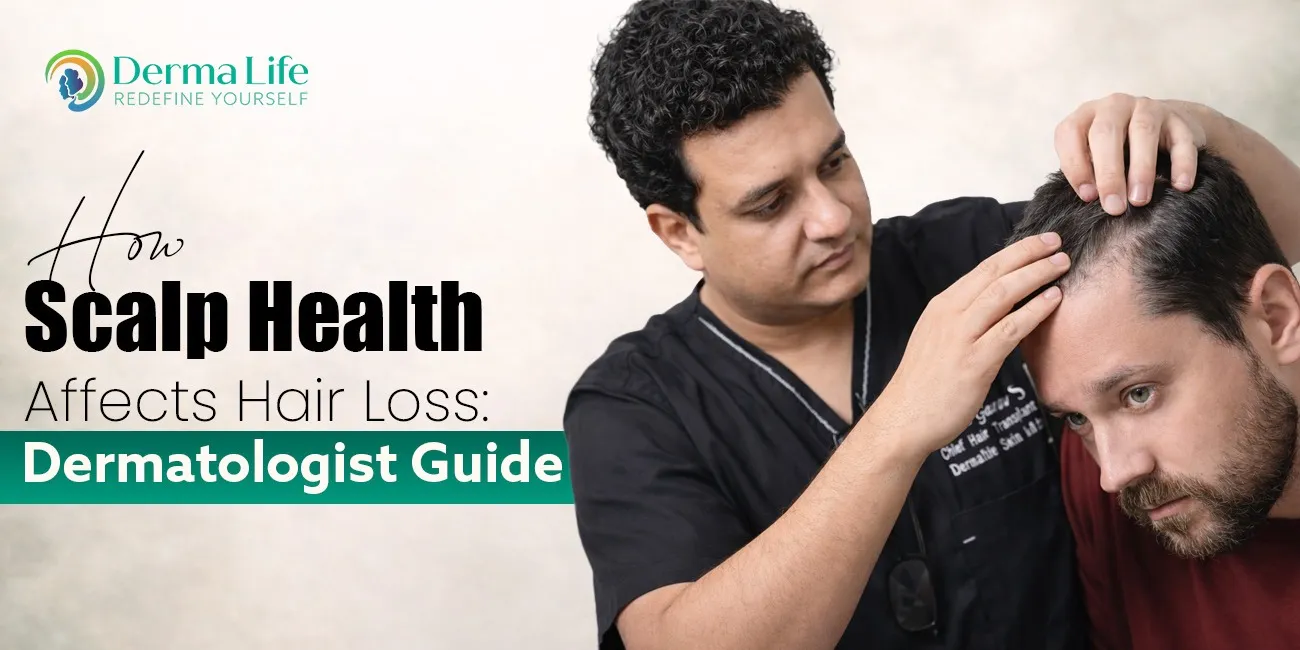
Dr. Gaurav Garg at Dermalife Hair & Skin Clinic
Patients researching a hair transplant surgeon in Delhi NCR may come across Dr. Gaurav Garg of Dermalife Hair & Skin Clinic.
His clinic profile highlights 18+ years of experience and 10,000+ procedures, with hair restoration services including FUE and Boosted FUE.
During a consultation, patients can discuss their hair-loss pattern, donor area, graft requirements, hairline design, expected recovery, and treatment options.
Individual suitability and expected results should always be assessed during a medical consultation.
10 Things to Understand Before Getting a Hair Transplant
Before scheduling a procedure, consider these ten points:
- Understand the cause of your hair loss.
- Check whether you are a suitable candidate.
- Evaluate your donor area.
- Discuss your desired hairline.
- Understand the estimated graft requirement.
- Ask which technique is recommended and why.
- Review relevant before-and-after cases.
- Understand the complete treatment cost.
- Ask about recovery and follow-up.
- Discuss long-term hair-loss management.
Frequently Asked Questions
What is the most important part of a hair transplant?
Hair transplantation involves several important components, including diagnosis, graft planning, donor management, hairline design, extraction, implantation, and aftercare. The importance of each depends on the individual case.
How much does a hair transplant cost in Delhi?
There is no universal price. The total cost can depend on graft numbers, technique, clinic, procedure complexity, and individual treatment requirements.
How many grafts are needed for a hairline transplant?
The number varies according to the size of the area, existing density, hair characteristics, and desired restoration.
Can a hair transplant make the hairline completely straight?
A natural-looking hairline is generally designed with subtle variation rather than an unnaturally straight appearance.
Is FUE painful?
FUE is performed using local anesthesia. Patients may experience some discomfort during or after the procedure, but individual experiences vary.
Can hair transplant results look natural?
Natural appearance depends on factors such as hairline design, graft selection, placement, direction, density planning, and the patient's individual hair characteristics.
Can women undergo a hair transplant?
Some women may be suitable candidates, depending on the cause and pattern of hair loss and the availability of suitable donor follicles.
Final Thoughts
A successful hair transplant is not simply about adding more hair. It is about creating a restoration plan that works with the patient's existing hair, facial features, donor supply, and long-term hair-loss pattern.
If you are considering a hair transplant in Delhi NCR, understanding hairline design and graft planning can help you have a more productive consultation and develop realistic expectations.
Whether you are researching a hair transplant clinic in Delhi, hair transplant center in New Delhi, Noida, or Gurgaon, look beyond package prices and focus on the complete treatment plan, medical evaluation, surgical approach, and long-term restoration strategy.
Product & Services
Gallery

Our Similar Profiles